
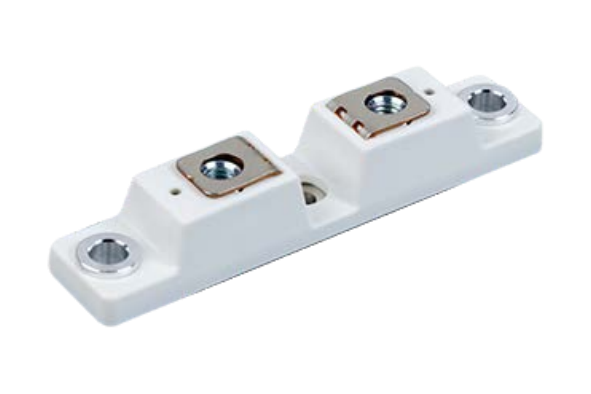
Schottky Modules HS8MBRH200N1X100
HS8MBRH200N1X100 · Schottky Modules.
- Package
- M31H
- VRRM
- 100
- IFAV
- 200
- VF
- 0.95
- IFSM(A)
- 1650
- Feature
- Non-isolation SBD
Request a quote
Part: HS8MBRH200N1X100We will follow up by email after submission.
Product Introduction
HS8MBRH200N1X100 · Schottky Modules.
Verified key specifications include VRRM 100, IFAV 200, VF 0.95, Package M31H.
Verified typical applications include Server, Industrial Automation, Industrial Power, Motor Drive, EV Charging, Energy Storage, PV, Telecom.
This page provides the verified datasheet for this model to support full technical review.
Use this page to review selection conditions, request samples or discuss the application.
Specifications
| Package | M31H |
|---|---|
| VRRM | 100 |
| IFAV | 200 |
| VF | 0.95 |
| IFSM(A) | 1650 |
| Feature | Non-isolation SBD |
Datasheet
- Hot-swap ORing Schottky modules: Isolation vs. Non‑isolation selection is determined primarily by bus architecture
- Joint Heating in Quadruped Robots: How Schottky Modules Reduce Thermal Losses in Free‑wheeling Paths
- Industrial Power Supply N+1 Redundant Parallel Silicon Schottky: Can Positive Temperature Coefficient Enable Self-Current Sharing?
- Servo Drive Overheating Persists? Before Replacing the Heatsink, Check the Diode in the Freewheeling Loop
- Servo drive cooling won’t come down—where exactly is the problem?
- Why EV Charging Stations Need Dedicated Schottky Modules?
- Hot-Swap ORing: The Irreplaceable Role and Real Cost of Schottky Modules
- Why do PV combiner boxes need dedicated anti-reverse Schottky modules?
- The efficiency ceiling of industrial UPS and high-end PFC often comes down to a single Boost diode
- Telecom Power Supply PFC Stage Efficiency Stuck at 96%: Before Replacing the Main Switch, Calculate the Boost Diode Losses First
- Module packaging turns VFM from a “nominal value” into a “calculable value”
- N+M Parallel PSU Light-Load Current-Sharing Misconception: Positive VF Temperature Coefficient Is Not a Guarantee—the ZTC Point Is the Key Selection Criterion